
How to Create a Healthier Home: Simple Swaps to Reduce Everyday Chemical Exposure
When we think about supporting our health, most of us naturally focus on food, movement, sleep, stress, and healthy relationships. Those foundations matter deeply. But our home environment plays a role, too. The water we drink, the air we breathe, the cookware we use, the containers we store food in, and the products we clean with all shape the exposures we have day after day.
One of the most empowering things we can do is become a little more aware of those everyday inputs. Health is shaped not only by the big choices we make, but also by the small, repeated ones woven into daily life. Over time, low-level exposures from multiple sources can add up, which is why researchers continue to study chemicals such as PFAS, plastic-associated compounds, and volatile chemicals commonly used in household products [1,2,3,4].
The good news is that you do not need to overhaul your life overnight. A few thoughtful changes can meaningfully reduce exposure in the places that matter most.
Why This Matters
Some everyday chemicals are being studied because they may affect hormone signaling, thyroid function, immune function, and metabolic health. Researchers often refer to some of these compounds as endocrine-disrupting chemicals because they may interfere with how hormones are made, transported, or used in the body [1, 2]. Indoor air pollutants and household cleaning product exposures have also been associated with respiratory symptoms and airway irritation [3,4].
That does not mean every exposure causes disease, and it does not mean every person will respond the same way, but it does mean that this is a reasonable area to pay attention to as part of the bigger picture of health
Create a Healthier Home Environment
When people start thinking about making healthier swaps in the home, it can feel overwhelming. A more grounded approach is to focus on a few key areas where everyday exposure tends to add up: the air you breathe, the water you drink, the cookware and containers that touch your food, and the products you use to clean your home.
You do not need to change everything at once. A few thoughtful upgrades in the areas you use most often can be a meaningful place to start.
Areas to Consider
Air: open windows, improve ventilation, and consider air filters in the home
Studies have shown that indoor air pollutant levels can be two to five times higher than outdoor levels, largely due to everyday activities like cooking, cleaning, and the use of fragranced products in enclosed spaces [5].
Poor indoor air quality has been associated with respiratory symptoms and airway irritation [3]. Opening windows when possible, using exhaust fans when cooking, and adding portable air filtration units in key rooms can be practical first steps.
Water: consider a water filtration system for your home
We rely on water every day for drinking, cooking, and bathing, so it is worth taking a closer look at the quality of the water coming into the home. Depending on where you live, the water may contain disinfection byproducts, heavy metals, PFAS, nitrates, or other contaminants [6]. There can also be differences between town water and well water. Municipal water is treated and monitored, while well water may require more individual testing and oversight.
Municipal systems are required to meet federal safety standards, but some organizations, including EWG, use more conservative guidelines based on emerging research. This is one reason you may see differences between what is considered “allowable” and what is considered “optimal.”
Rather than guessing, it can be helpful to review your local water quality report first. Tools like EWG’s Tap Water Database can be a useful starting point for this.
Water filter options can include pitcher filters, countertop filters, under-sink systems, whole-house filtration, and shower filters, depending on your needs.
Cookware: be more mindful of older non-stick pans
PFAS, or per- and polyfluoroalkyl substances, are a large class of highly persistent chemicals often referred to as “forever chemicals” because they break down very slowly in the environment and can remain in the body over time [1].
PFAS often come up in conversations about Teflon™ and other non-stick cookware because traditional non-stick surfaces have historically been linked to this broader class of chemicals. For people who want to be more intentional about everyday food-contact exposures, a reasonable place to start is by phasing out older, scratched, or worn non-stick pans over time and replacing them with stainless steel, cast iron, or glass bakeware.
Food containers: swap plastic for glass and stainless steel when you can
This is especially worth considering for foods and drinks that are heated, stored regularly, or used every day. Bisphenols and phthalates commonly found in plastics are classified as endocrine-disrupting chemicals and have been linked to cardiometabolic and hormonal effects [2].
Glass food containers and stainless steel or glass water bottles are simple, durable swaps that can help reduce repeated food-contact exposure.
Cleaning products: keep it simple and be more selective
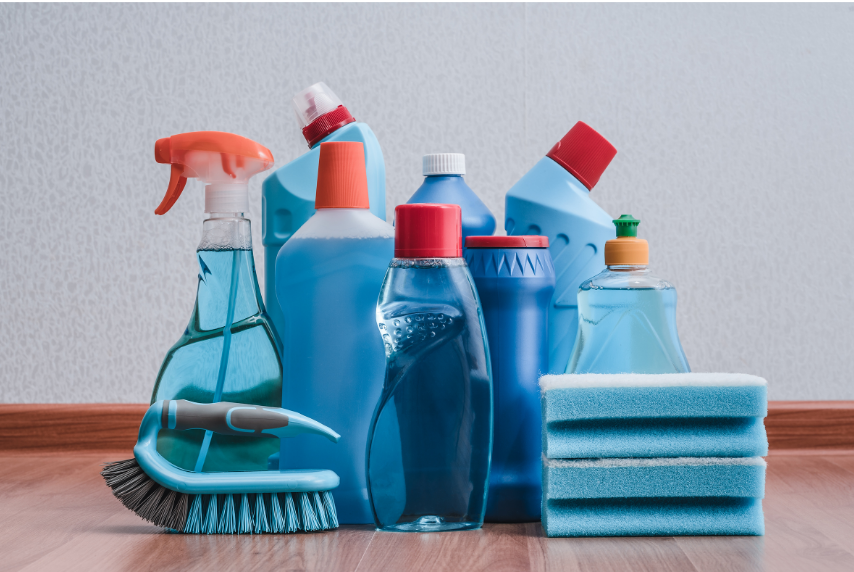
Many popular and conventional cleaning products are much stronger, more fragranced, or more chemically complex than what is needed for everyday household cleaning. Cleaning products can affect indoor air quality, and frequent use of household cleaning sprays has been associated with respiratory symptoms and asthma risk in adults [4,7].
A helpful place to start is simplifying where you can and being more intentional about what you bring into your home. As a practical tool, the Environmental Working Group (EWG) offers a Guide to Healthy Cleaning, which rates products based on ingredient safety and transparency and can help you compare options and choose lower-exposure products. For some household tasks, simple DIY options like vinegar, baking soda, or unscented castile soap can also work well, depending on the surface and the type of cleaning needed.
The goal is not perfection. It is to become a little more intentional about the products, materials, and routines that shape your home environment every day. Starting with a few manageable changes can be an empowering way to support your health over time.
References
1. Fenton SE, Ducatman A, Boobis A, et al. Per- and Polyfluoroalkyl Substance Toxicity and Human Health Review: Current State of Knowledge and Strategies for Informing Future Research. Environ Toxicol Chem. 2021;40(3):606-630. PMID: 33017053.
2. Lucas A, Bhatnagar A. The role of endocrine-disrupting phthalates and bisphenols in cardiometabolic disease: the evidence is mounting. Curr Opin Endocrinol Diabetes Obes. 2022;29(2):103-109. PMID: 35196260.
3. Raju S, Kanchustambham V, Mehta AC. Indoor Air Pollution and Respiratory Health. Clin Chest Med. 2020;41(4):825-843. PMID: 33153602.
4. Salonen H, Salthammer T, Morawska L. Cleaning products: Their chemistry, effects on indoor air quality, and implications for human health. Build Environ. 2024;261:111774. PMID: 38917624.
5. U.S. Environmental Protection Agency. (n.d.). Indoor air quality. https://www.epa.gov/report-environment/indoor-air-quality
6. CDC. About Choosing Home Water Filters; Chemicals That Can Contaminate Tap Water.
7. Zock JP, Plana E, Jarvis D, et al. The use of household cleaning sprays and adult asthma: an international longitudinal study. Am J Respir Crit Care Med. 2007;176(8):735-741. PMID: 17585104.